Roast level is one of the first things printed on a coffee pack, and one of the least explained. Light, medium and dark describe how far the coffee was roasted, and that single decision has a large effect on how the cup tastes. This guide explains what happens during roasting and what to expect from each level.
How roasting changes coffee
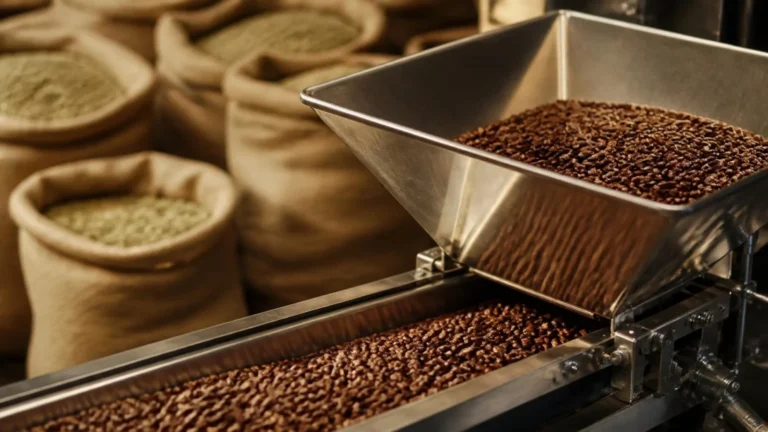
Green coffee is dense, pale and grassy-smelling. During roasting, heat drives off moisture and triggers reactions that brown the bean and create the aromas associated with coffee. The beans expand, lose weight and darken. The longer and hotter the roast, the darker the bean and the more the flavours created by roasting itself come forward.
A useful way to think about it: lighter roasts show more of the character of the coffee itself, and darker roasts show more of the character of the roast.
Light roast
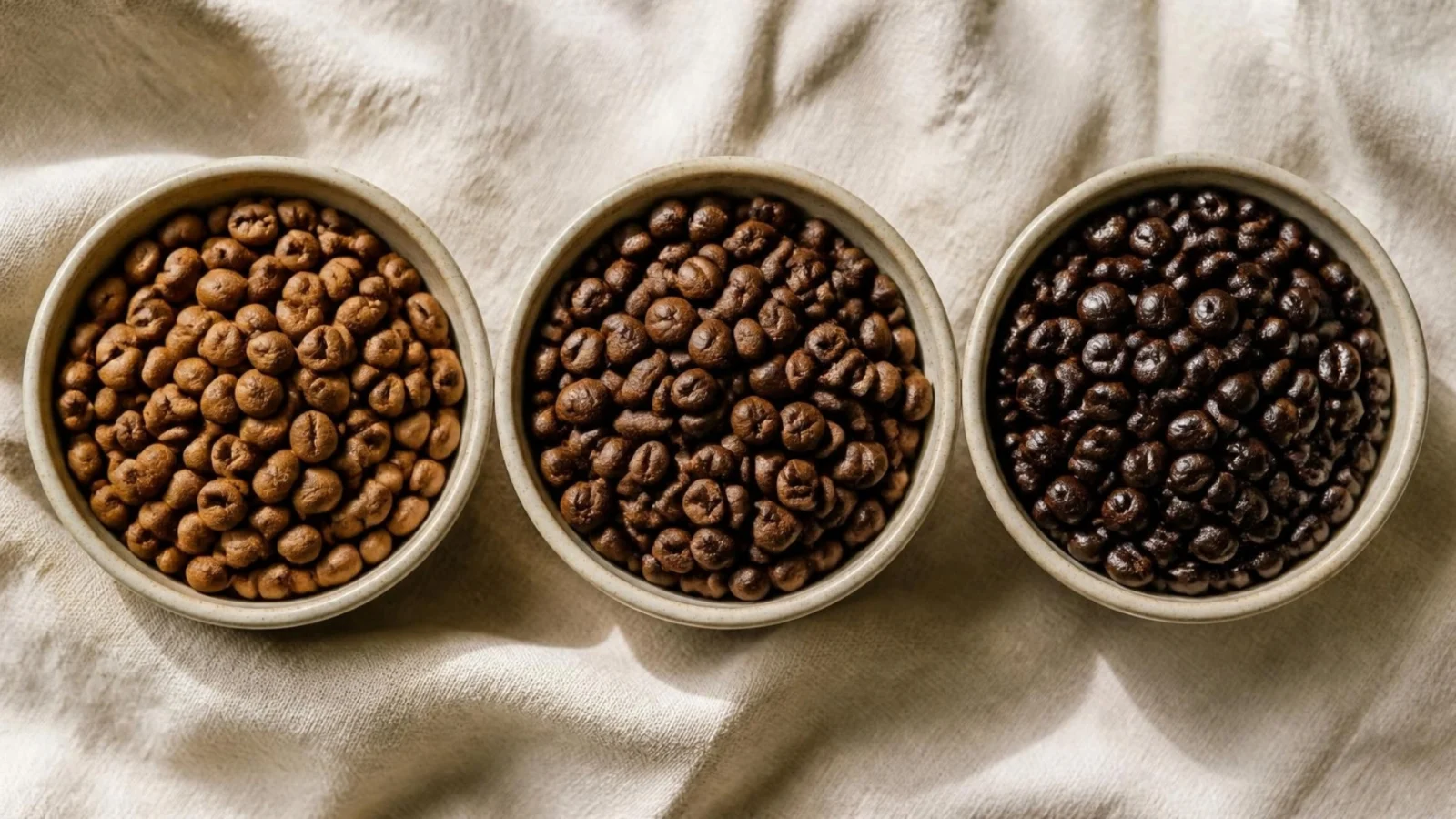
Light roasts are light brown with a dry, matte surface. They generally taste brighter, with more noticeable acidity and a lighter body. Because less of the original character is roasted away, differences between origins tend to be easier to taste.
Medium roast
Medium roasts are a medium brown and still dry on the surface. They are generally more balanced, with less acidity than a light roast and more sweetness and body. Many everyday espresso and filter coffees sit here, along with medium-dark roasts, which are a shade deeper and fuller.
Dark roast
Dark roasts are dark brown to nearly black, often with a visible sheen of oil on the surface. Acidity is low, body is heavier, and the flavour is bolder with more bitterness. Roast flavours dominate, which is why dark roasts are often described with words like cocoa, toast and smoke.
Does dark roast have more caffeine?
It is a common assumption, but a bolder taste does not mean more caffeine. According to the National Coffee Association USA, dark roasts are not stronger in caffeine, and light roasts contain slightly more.
Source: General roast-level descriptions in this article are consistent with the National Coffee Association USA guide, Coffee Roasts. Roast names are not standardised across the industry, so one roaster’s medium can be another’s medium-dark.
Choosing a roast level
There is no best roast, only a best fit for how you drink or serve coffee.
- If you like a bright, lighter cup or brew by filter or pour-over, start with a light or medium roast.
- If you want one coffee that works black and with milk, a medium or medium-dark roast is the usual choice.
- If you prefer a bold, low-acidity cup or mostly serve milk drinks, look at dark roasts.
- For traditional preparations, follow the style: Arabic coffee is commonly roasted light, while Turkish coffee is usually medium or darker.
Roast levels in the Single Origin range
Each coffee in our range lists its roast level on its product page. A few examples:
You can browse all fifteen coffees in the shop.
In summary
Roasting moves coffee along a line from bright and light-bodied to bold and heavy-bodied. Light roasts favour the character of the bean, dark roasts favour the character of the roast, and medium roasts sit between the two. The right choice depends on how you brew and what you enjoy. If you are choosing coffee for a business, format matters as much as roast level.